In the dynamic landscape of modern business, understanding and effectively managing risks are imperative for sustainable growth and success. Artificial Intelligence (AI) and Machine Learning (ML) have emerged as formidable allies in the realm of risk management, revolutionizing how organizations identify, assess, and mitigate potential threats. This article delves into the ways AI and ML contribute to risk management and explores their diverse applications across various industries.
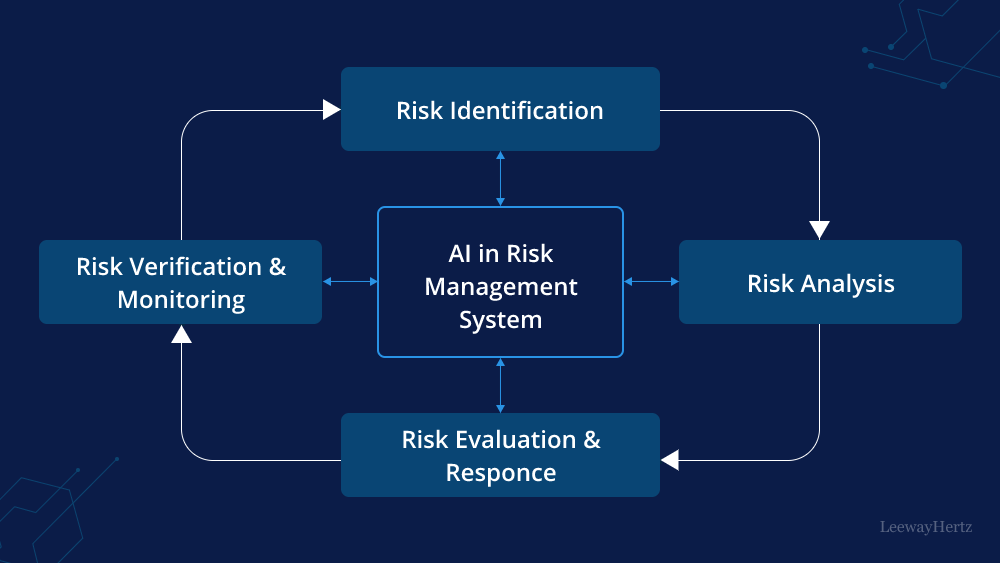
How do AI and ML Help in Risk Management?
AI and ML leverage advanced algorithms and data analytics to analyze vast datasets, identify patterns, and make predictions. These technologies enhance risk management by providing real-time insights, automating processes, and improving the accuracy of risk assessments. Here’s how AI and ML play a pivotal role in mitigating risks across different sectors.
Applications of AI in Risk Management Across Industries
Risk Management in Finance
In the financial sector, AI and ML are instrumental in fraud detection, credit scoring, and algorithmic trading. These technologies analyze transaction patterns, identify anomalies, and provide accurate risk assessments, enabling financial institutions to make informed decisions and enhance overall security.
Risk Management in Retail & E-commerce
AI optimizes supply chain management, predicts consumer trends, and detects fraudulent activities in retail and e-commerce. By analyzing customer behavior and market dynamics, AI assists businesses in making data-driven decisions, minimizing inventory risks, and ensuring a seamless customer experience.
Risk Management in Healthcare
In healthcare, AI contributes to patient safety, drug development, and disease prediction. Machine learning algorithms analyze patient data to identify potential risks, improve diagnostics, and enhance treatment planning, thereby increasing the overall effectiveness of healthcare risk management.
Risk Management in Telecommunication
AI aids telecommunication companies in network security, fraud prevention, and predictive maintenance. By continuously monitoring network behavior and identifying potential threats, AI ensures the resilience of telecommunication systems and minimizes the impact of disruptions.
Risk Management in the Automotive Industry
In the automotive sector, AI enhances vehicle safety, predicts maintenance needs, and improves manufacturing processes. Machine learning algorithms analyze data from sensors and connected devices to identify potential risks, ensuring proactive risk management in the design, production, and maintenance of vehicles.
Risk Management in Insurance
AI plays a crucial role in insurance through underwriting, claims processing, and fraud detection. By analyzing historical data and predicting future trends, AI enables insurance companies to assess risks accurately, streamline claims processing, and prevent fraudulent activities.
Risk Management in Manufacturing
AI enhances risk management in manufacturing by optimizing production processes, predicting equipment failures, and ensuring quality control. Machine learning algorithms analyze data from sensors and production lines to identify potential risks, minimizing downtime and improving overall efficiency.
Risk Management in Education
In the education sector, AI assists in student performance analysis, resource allocation, and cybersecurity. By leveraging AI, educational institutions can identify risks related to student success, allocate resources effectively, and enhance security measures to protect sensitive data.
Embracing the Future of Risk Management
As industries continue to evolve, the integration of AI in risk management will become more sophisticated. Businesses that adopt and leverage these technologies will be better equipped to navigate uncertainties, make informed decisions, and stay ahead of potential risks. The transformative impact of AI in risk management highlights its role as a valuable ally in ensuring the resilience and sustainability of organizations across diverse sectors.
 LeewayHertz