In the ever-evolving landscape of business governance, compliance stands as a cornerstone, ensuring that organizations adhere to regulatory standards and guidelines set forth by various authorities. Compliance encompasses the adherence to laws, regulations, and industry standards relevant to a particular business operation. Failure to comply can result in severe consequences, including legal penalties, reputational damage, and financial losses.
What is Compliance?
Compliance refers to the process of conforming to rules, regulations, and standards established by governing bodies. It encompasses a wide range of areas, including financial reporting, data protection, environmental regulations, and industry-specific guidelines. Compliance aims to mitigate risks, promote transparency, and maintain integrity within organizations.
The Importance of Regulatory Compliance for Businesses
Regulatory compliance is paramount for businesses as it ensures ethical conduct, fosters trust among stakeholders, and protects consumers’ interests. Non-compliance can lead to legal ramifications, financial losses, and tarnished reputations, ultimately jeopardizing the sustainability of the organization.
Key Regulatory Frameworks: An Overview
Various regulatory frameworks govern different aspects of business operations globally. These include GDPR (General Data Protection Regulation), SOX (Sarbanes-Oxley Act), HIPAA (Health Insurance Portability and Accountability Act), and PCI DSS (Payment Card Industry Data Security Standard), among others. Each framework sets forth specific requirements and guidelines tailored to the respective domain, necessitating meticulous compliance efforts from organizations.
Challenges Faced by Organizations in Achieving Compliance
Achieving compliance can be daunting for organizations due to the complexities involved in interpreting and implementing regulatory requirements. Common challenges include keeping pace with evolving regulations, managing data privacy and security effectively, and ensuring consistency across diverse geographical regions and business functions.
The Role of Generative AI in Regulatory Compliance
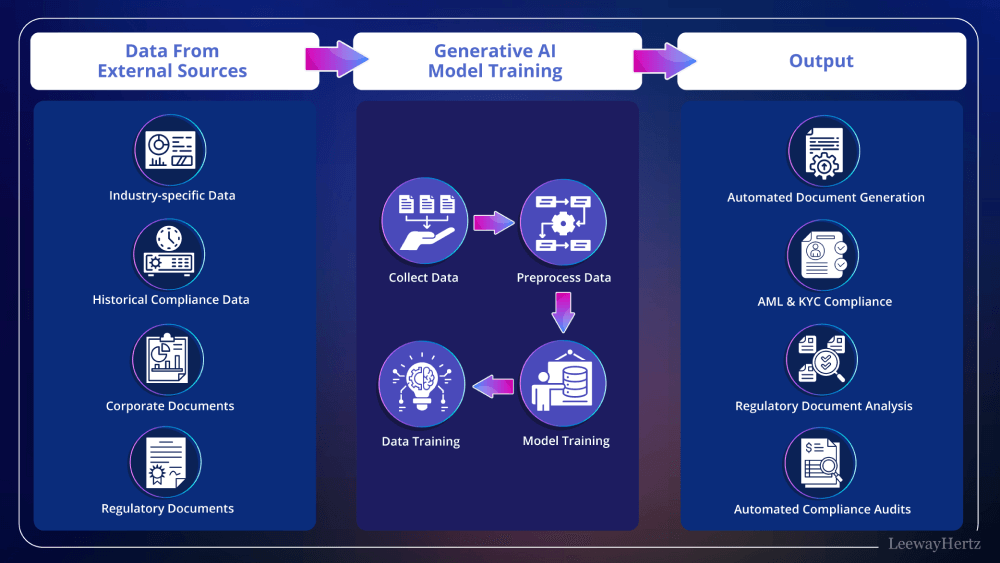
Generative AI, with its ability to analyze vast amounts of data, interpret complex patterns, and generate human-like outputs, presents a promising solution for addressing compliance challenges. By leveraging machine learning algorithms, generative AI can assist organizations in automating compliance processes, identifying potential risks, and enhancing decision-making accuracy.
Benefits of Leveraging Generative AI for Regulatory Compliance
The adoption of generative AI in compliance offers numerous benefits, including improved efficiency, enhanced accuracy, and proactive risk management. By automating routine tasks such as data analysis and documentation, generative AI enables organizations to allocate resources more effectively, streamline workflows, and reduce operational costs.
Practical Applications of Generative AI in Regulatory Compliance
Generative AI finds practical applications across various compliance-related activities, including:
- Regulatory Monitoring and Analysis: Generative AI can analyze regulatory updates, interpret their implications, and recommend actionable insights to ensure timely compliance.
- Risk Assessment and Mitigation: By analyzing historical data and identifying patterns, generative AI can help organizations anticipate potential compliance risks and implement proactive measures to mitigate them.
- Document Automation and Management: Generative AI can automate the generation, review, and management of compliance documents, ensuring accuracy, consistency, and compliance with regulatory standards.
- Training and Education: Generative AI-powered chatbots and virtual assistants can provide employees with real-time guidance and training on compliance-related matters, facilitating knowledge transfer and fostering a culture of compliance within the organization.
In conclusion, generative AI presents a transformative opportunity for organizations to enhance their compliance efforts, streamline processes, and mitigate risks effectively. By embracing this intelligent approach to business governance, organizations can navigate the complex regulatory landscape with confidence, ensuring sustained growth and resilience in an increasingly regulated environment.
 LeewayHertz