In recent years, Artificial Intelligence (AI) has emerged as a transformative force across various sectors, revolutionizing the way businesses operate. From streamlining processes to enhancing customer experiences, AI has found applications in almost every major industry, reshaping the landscape of modern business operations.
Role of AI in Business Operations
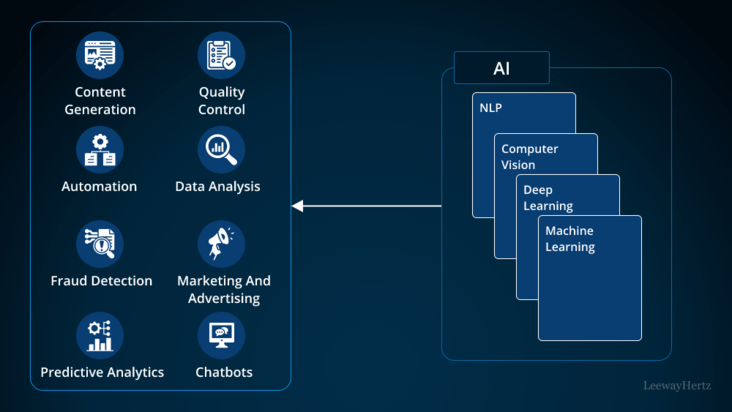
AI plays a pivotal role in optimizing business operations by automating tasks, analyzing vast datasets, and providing valuable insights for informed decision-making. Its ability to handle complex algorithms and learn from patterns makes it indispensable in driving efficiency and innovation across industries.
AI Use Cases in Major Industries
Healthcare: AI applications in healthcare range from personalized treatment plans to predictive analytics for disease diagnosis, improving patient outcomes and operational efficiency.
Retail and E-commerce: AI-powered recommendation systems, inventory management, and chatbots enhance customer engagement and streamline supply chain operations in the retail sector.
Food Tech: AI is revolutionizing food production processes with predictive analytics for demand forecasting, optimizing inventory management, and ensuring food safety standards.
Banking and Financial Services: From fraud detection to algorithmic trading, AI algorithms analyze financial data in real-time, improving risk management and enhancing customer service through chatbots and virtual assistants.
Supply Chain and Logistics: AI-driven predictive analytics optimize route planning, inventory management, and demand forecasting, minimizing costs and improving delivery efficiency.
Travel: AI applications in travel include personalized travel recommendations, dynamic pricing, and virtual assistants, enhancing customer experiences and operational efficiency for travel companies.
Real Estate: AI-powered tools facilitate property valuation, predictive analytics for market trends, and personalized property recommendations, revolutionizing the real estate sector.
Media and Entertainment: AI algorithms analyze user preferences to recommend content, enhance content creation through automated editing, and optimize distribution channels, driving engagement and revenue.
Manufacturing: AI-enabled predictive maintenance, quality control, and supply chain optimization improve production efficiency and reduce downtime in manufacturing processes.
Automotive: AI applications include autonomous vehicles, predictive maintenance, and driver assistance systems, revolutionizing the automotive industry’s safety, efficiency, and sustainability.
Education: AI-powered personalized learning platforms, virtual tutors, and automated grading systems enhance educational outcomes and streamline administrative tasks for educators.
Fashion: AI-driven trend forecasting, personalized styling recommendations, and virtual try-on experiences revolutionize the fashion industry’s marketing and customer engagement strategies.
Private Equity and Principal Investment: AI algorithms analyze market data for investment opportunities, optimize portfolio management, and enhance due diligence processes, improving investment decisions and returns.
Legal Businesses: AI applications in legal businesses include contract analysis, legal research, and predictive analytics for case outcomes, improving efficiency and accuracy in legal operations.
Information Technology: AI-driven cybersecurity, IT infrastructure management, and automated troubleshooting enhance operational efficiency and security in IT processes.
Hospitality: AI-powered chatbots, personalized recommendations, and dynamic pricing strategies optimize guest experiences and streamline hotel operations.
How to Implement AI in Business Operations
To harness the benefits of AI in business operations, companies can follow these steps:
- Identify Use Cases: Determine specific areas where AI can add value, considering factors such as data availability, business objectives, and technological feasibility.
- Data Preparation: Gather and clean relevant data for AI model training, ensuring its quality and consistency to generate accurate insights.
- AI Model Selection: Choose appropriate AI algorithms and techniques based on the identified use cases, considering factors such as data complexity and business requirements.
- Implementation and Integration: Develop and deploy AI models into existing business processes, integrating them with relevant systems and workflows for seamless operation.
- Continuous Monitoring and Improvement: Regularly monitor AI performance, collecting feedback and updating models to adapt to changing business needs and evolving data patterns.
By leveraging AI use cases and applications tailored to their industries, businesses can unlock new opportunities for growth, innovation, and competitive advantage in today’s dynamic market landscape.
 LeewayHertz