In today’s rapidly evolving transportation landscape, fleet management plays a pivotal role in ensuring the smooth operation of vehicles, optimizing routes, and enhancing safety standards. With the integration of artificial intelligence (AI), fleet management has evolved into a smarter, more efficient system capable of tackling complex challenges.
What is Fleet Management?
Fleet management involves overseeing a company’s vehicle fleet, including cars, trucks, vans, and specialized vehicles. It encompasses various tasks such as vehicle tracking, maintenance scheduling, fuel management, and driver behavior monitoring.
Technologies behind AI-enabled Fleet Management
AI-powered fleet management relies on sophisticated technologies such as machine learning algorithms, GPS tracking systems, telematics devices, and sensors. These technologies collect and analyze vast amounts of data in real-time to optimize fleet operations.
Key Components of an Effective Fleet Management Strategy
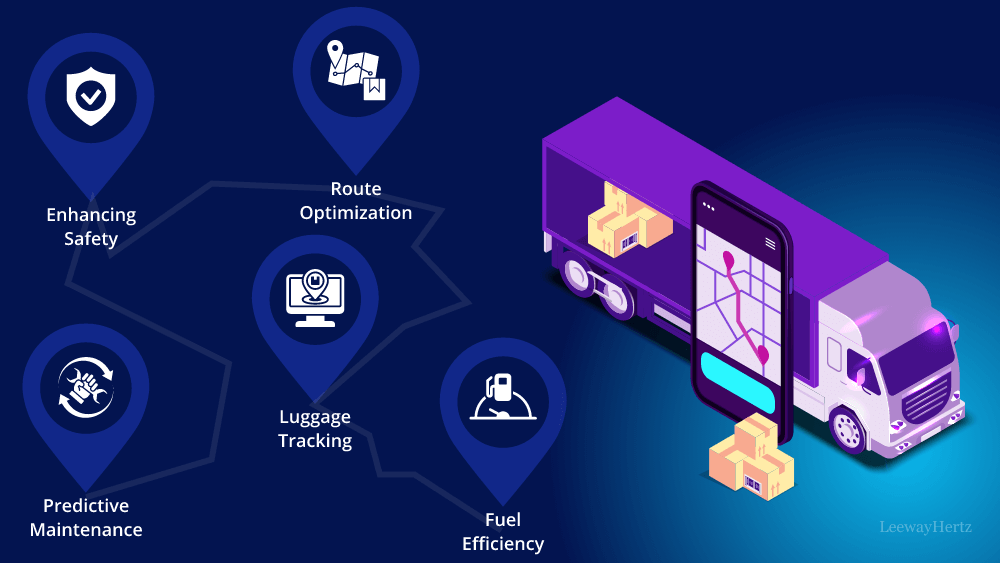
An effective fleet management strategy comprises several key components, including predictive maintenance, route optimization, fuel efficiency monitoring, driver behavior analysis, and compliance management. These components work together to streamline operations and maximize productivity.
Use Cases of AI in Fleet Management
AI has revolutionized fleet management by offering innovative solutions across various domains. Some common use cases include predictive maintenance, where AI algorithms forecast equipment failures before they occur, and route optimization, which calculates the most efficient routes based on traffic conditions and other factors.
Benefits of AI in Fleet Management
The integration of AI in fleet management yields numerous benefits, including improved safety, reduced operational costs, enhanced vehicle performance, optimized resource utilization, and increased customer satisfaction. These advantages contribute to greater overall efficiency and profitability.
The Future of AI in Fleet Management
As AI technology continues to advance, the future of fleet management holds even greater promise. We can expect further automation, integration with emerging technologies like autonomous vehicles and IoT devices, enhanced predictive analytics capabilities, and a more personalized approach to fleet optimization.
In conclusion, AI-enabled fleet management represents a paradigm shift in the transportation industry, offering unprecedented levels of safety, efficiency, and innovation. By harnessing the power of AI, organizations can stay ahead of the curve and unlock new possibilities for their fleets.
 LeewayHertz