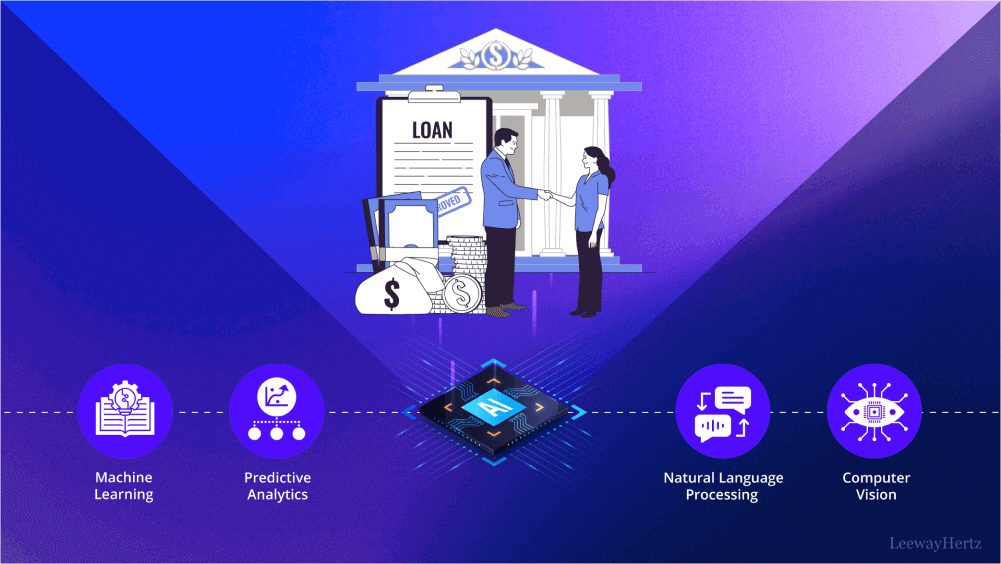
Artificial Intelligence (AI) is revolutionizing various sectors, and the lending industry is no exception. The integration of AI in lending processes is reshaping how financial institutions operate, offering significant benefits such as improved efficiency, enhanced customer experiences, and better risk management.
Streamlined Loan Processing
One of the most significant impacts of AI in lending is the streamlining of loan processing. Traditional loan approval processes can be time-consuming and labor-intensive, often taking weeks to complete. AI-driven solutions can automate many of these tasks, reducing the processing time to a matter of hours or even minutes. By using machine learning algorithms, lenders can quickly assess a borrower’s creditworthiness, analyze risk factors, and make informed decisions more efficiently.
Enhanced Customer Experience
AI-powered chatbots and virtual assistants are transforming customer service in the lending industry. These tools can provide instant responses to customer inquiries, guide applicants through the loan process, and offer personalized financial advice. This not only improves customer satisfaction but also allows lenders to handle a higher volume of inquiries without a corresponding increase in staffing costs.
Improved Risk Management
AI algorithms excel at analyzing large datasets to identify patterns and trends that might not be apparent to human analysts. In the context of lending, this capability is invaluable for risk management. AI can assess an applicant’s likelihood of default with greater accuracy by considering a broader range of variables, including non-traditional data such as social media activity and transaction histories. This leads to more accurate risk assessments and helps lenders mitigate potential losses.
Fraud Detection and Prevention
AI also plays a crucial role in detecting and preventing fraud in the lending industry. Machine learning models can analyze transaction patterns and flag unusual activities that might indicate fraudulent behavior. By continuously learning from new data, these models become increasingly adept at identifying and preventing fraud, protecting both lenders and borrowers.
Expanding Access to Credit
AI has the potential to democratize access to credit by enabling lenders to reach underserved populations. Traditional credit scoring models often exclude individuals with limited credit histories. AI-driven models can evaluate alternative data sources, such as utility payments and rental histories, to assess creditworthiness. This opens up new opportunities for individuals who might otherwise be denied credit.
In conclusion, the adoption of AI in lending is transforming the financial landscape. By streamlining processes, enhancing customer experiences, improving risk management, and expanding access to credit, AI is helping lenders operate more efficiently and effectively in an increasingly competitive market. As AI technology continues to evolve, its impact on the lending industry is likely to grow, paving the way for even more innovative solutions and improved financial services.
 LeewayHertz