AI is revolutionizing the credit scoring industry by providing more accurate and comprehensive assessments of borrowers’ creditworthiness. Traditional credit scoring models rely heavily on historical credit data, which can be limiting and often fails to account for the full financial picture of an individual. AI-based credit scoring, on the other hand, uses advanced algorithms and alternative data sources to evaluate credit risk more holistically.
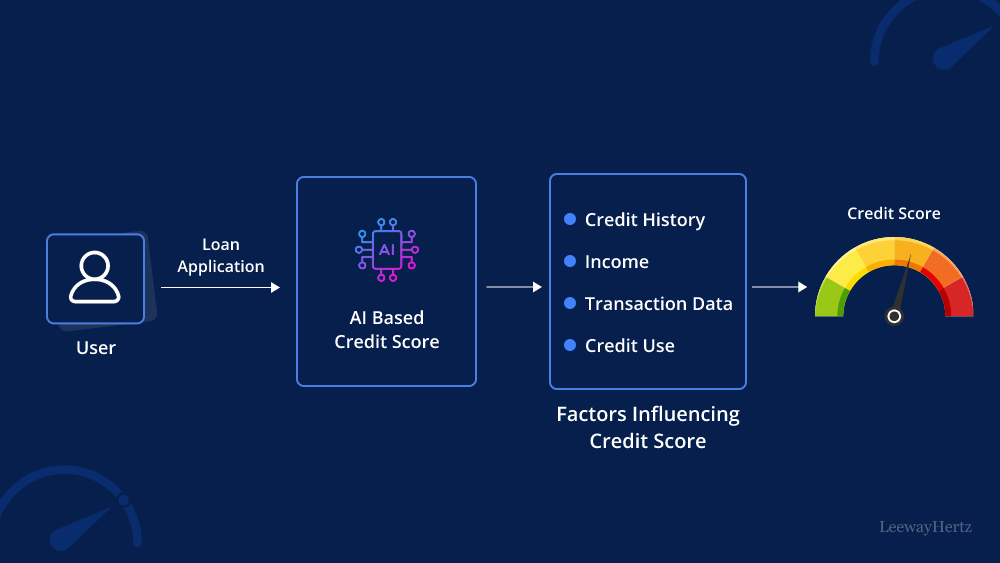
AI credit scoring models analyze a wide range of data, including transaction history, social media activity, employment records, and even utility bill payments. This allows lenders to gain a more nuanced understanding of a borrower’s financial behavior and make more informed lending decisions. By incorporating non-traditional data, AI can also help in assessing the creditworthiness of individuals who may not have an extensive credit history, thereby promoting financial inclusion.
Moreover, AI can continuously learn and adapt to changing economic conditions and borrower behavior. This dynamic approach ensures that credit scoring models remain relevant and accurate over time. AI-driven credit scoring systems also enhance fraud detection by identifying unusual patterns in financial data that may indicate fraudulent activity.
To delve deeper into AI-based credit scoring, refer to AI-Based Credit Scoring.
 LeewayHertz